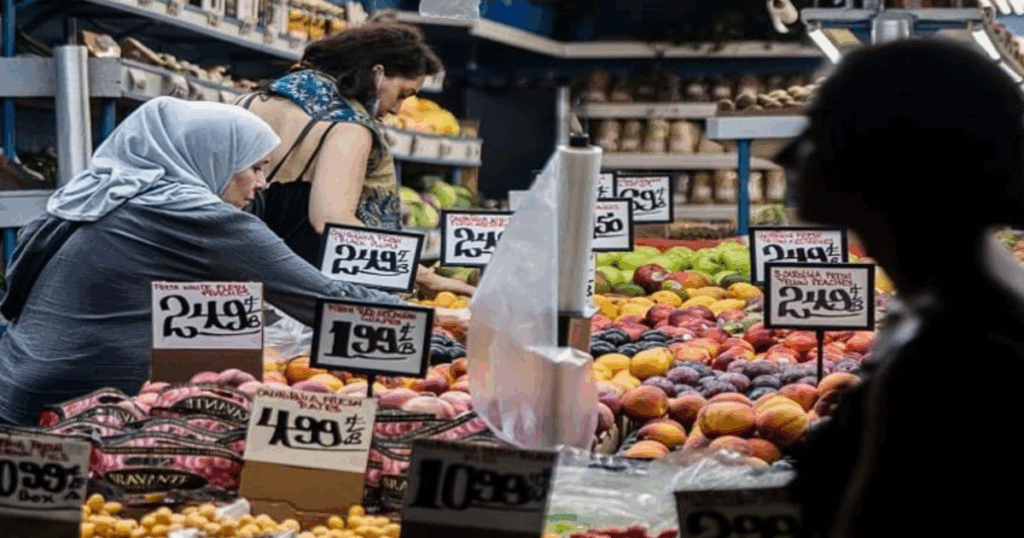



Despite a recent decline in global food prices, Bangladesh continues to witness a steep rise in the cost of essentials such as rice, lentils, oil, fish, meat, and vegetables. The UN Food and Agriculture Organization (FAO) reported that the global food price index fell slightly in September to 128.8 points from 129.7 in August. Prices of sugar, dairy, wheat, and rice dropped internationally, but the local market in Bangladesh shows the opposite trend, worsening the burden on low- and middle-income households.

Economists attribute this disparity to high domestic production, energy, and transportation costs, which continue to push prices upward. They emphasize that reducing these internal costs and improving market governance are essential to stabilize prices.
Professor Dr. Mustafizur Rahman, Distinguished Fellow at the Centre for Policy Dialogue (CPD), told Bangla Tribune that while global prices have declined, Bangladesh’s market has seen little impact. “Middlemen dominate the market once imported goods arrive, making internal market management more crucial than monitoring global trends,” he said.
Dr. Rahman added that although lower global prices could ease inflationary pressure, consumers will only benefit if the government strengthens market monitoring and ensures transparency. “If policymakers can achieve this, consumers will soon feel the relief in the markets,” he noted.
Experts argue that the high cost of gas, electricity, and diesel continues to inflate production and transport expenses. They suggest that lowering energy costs could have a positive ripple effect across the entire supply chain.
Analysts also warn that without competitive markets, effective supervision, and transparent trade policies, domestic consumers will remain unaffected by falling international prices.
Global Relief, Domestic Instability
Although global supplies have increased and prices declined, Bangladesh faces the opposite scenario. Economists cite seasonal effects, import dependency, disrupted border trade, and lack of market transparency as key reasons behind the price surge. They stress that without strict monitoring, better supply management, and control over business syndicates, local consumers will continue to suffer.
Global Outlook: Sugar and Dairy Prices Drop, But Meat Demand Rises
According to FAO data, global sugar prices fell by 4.1 percent in September — the lowest since 2021 — due to strong production in Brazil and favorable crop prospects in India and Thailand. Dairy prices also fell by 2.6 percent, led by a sharp drop in butter prices.
Meanwhile, prices of wheat, corn, and rice declined amid increased supply and reduced demand. However, beef and lamb prices rose, particularly in the United States, where strong demand met limited supply. FAO further projected that global grain production in 2025 could reach 2.971 billion metric tons, up 3.8 percent from last year — the highest growth since 2013.
Bangladesh: Inflation Eases Slightly, But Food Prices Remain High
Bangladesh’s overall inflation eased to 8.29 percent in August — the lowest in 37 months — though food inflation remained high. The Bangladesh Bank had hoped the rate would drop below 7 percent in September, but market realities suggest otherwise, as food prices continue to soar due to seasonal and festive factors.
According to the Trading Corporation of Bangladesh (TCB), prices of rice, lentils, flour, oil, fish, and meat have all risen compared to last year, though slight relief has been observed in onion, garlic, and eggs.
Steady Price Hike Across Staples
Fine rice now sells for Tk 75–85 per kilogram, up from Tk 64–80 last year.
Small-grain lentils cost Tk 150–160 per kilogram, compared to Tk 125–135 a year ago.
Loose soybean oil sells for Tk 170–178 per liter, bottled oil for Tk 188–190, and 5-liter bottles exceed Tk 900.
Rising Meat and Fish Prices
Even during peak season, Hilsa fish remains out of reach for many — smaller ones sell for Tk 500–700 per kilogram, while larger ones range from Tk 1,000 to Tk 2,500.
Rui and Katla fish cost Tk 300–500, goat meat Tk 1,000–1,200, and beef around Tk 750 per kilogram.
Vegetable Prices Surge Amid Supply Shortage
Prices of vegetables and spices have climbed sharply in Dhaka markets. Green chilies now cost Tk 300–350 per kilogram, up from Tk 180–250 a week ago. Round eggplant sells for Tk 220, carrots for Tk 120, tomatoes for Tk 140, and beans for Tk 100. Flat beans surged to Tk 240 before dropping slightly to Tk 160.
Vendors blame supply disruptions caused by rainfall and temporary trade halts at the India-Bangladesh border during the Puja holidays. Consumers, however, believe weak oversight and price manipulation by business syndicates are driving the surge.
Weak Oversight Blamed for Rising Prices
Consumer Association of Bangladesh (CAB) Senior Vice President S.M. Nazer Hossain told Bangla Tribune that despite declining international prices, Bangladesh’s government has failed to maintain effective market control. “Traders are not adjusting prices in line with global trends. They focus only on increasing prices, while the Tariff Commission remains passive when it comes to reducing rates,” he said.
Hossain noted that when global prices rise, the government often cuts import duties and taxes to offer relief — but these benefits rarely reach consumers. “Businesses pocket the profits instead,” he added.