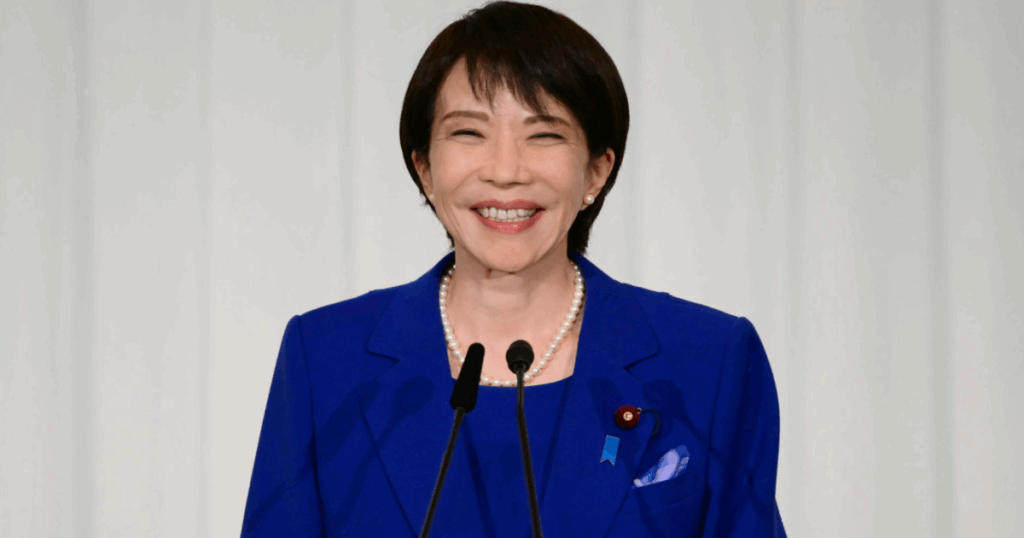











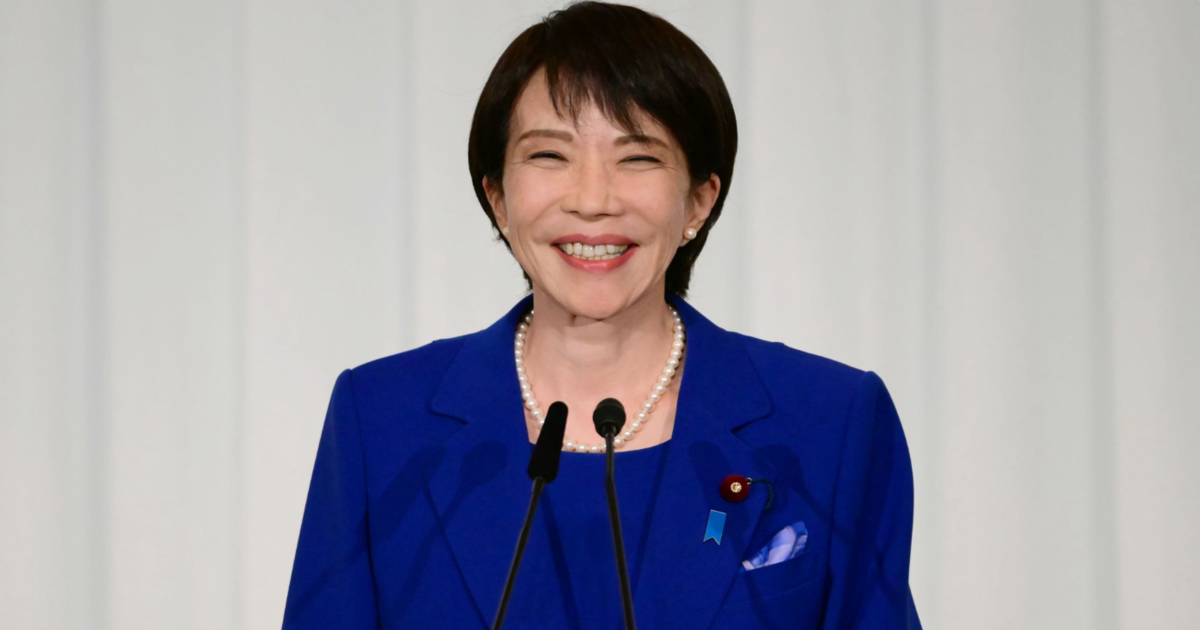
After two unsuccessful bids, Sanae Takaichi has finally realized her long-standing political ambition. On Saturday, she was elected leader of Japan’s ruling Liberal Democratic Party (LDP), positioning her to become the nation’s first female prime minister once confirmed by parliament on October 15.

The 64-year-old brings a distinctive background to the role: a former television presenter, heavy metal drummer, and seasoned politician, she now faces the daunting task of leading a divided party amid a backdrop of political scandal, demographic decline, and growing regional tensions.
Born in Nara Prefecture in 1961, Takaichi had no political lineage. Her father worked in an office while her mother served as a police officer. Before entering public service, she gained attention for her passionate drumming—reportedly breaking multiple drumsticks during performances—and developed a love for scuba diving and sports cars. Her prized Toyota Supra is currently on display in a local museum.
Takaichi’s political awakening occurred during the 1980s, as tensions flared between the U.S. and Japan over trade. She worked in the Washington office of Patricia Schroeder, a Democratic congresswoman known for her criticism of Japan. The experience highlighted to Takaichi how little many Americans understood about Japan, often confusing its culture and language with that of China and Korea. It was then she concluded that Japan must be capable of defending itself and shaping its own narrative.
She first contested a parliamentary seat in 1992 as an independent and lost, but succeeded the following year. Joining the LDP in 1996, she has since won ten elections, missing out only once. Over her career, she’s become a prominent conservative voice, serving in several key government roles including minister for economic security, state minister for trade and industry, and a long-standing tenure as minister for internal affairs and communications.
Takaichi made her first attempt at the LDP leadership in 2021, losing to Fumio Kishida. In 2024, she led in the first round but was defeated in the final vote by Shigeru Ishiba. This year, she clinched the leadership on her third try, coinciding with the LDP’s 70th anniversary.
She has often expressed admiration for former UK Prime Minister Margaret Thatcher and has described her personal mission as becoming Japan’s version of the “Iron Lady.” During her campaign, she shared this goal with school children, reflecting the image she hopes to cultivate as a strong and determined leader.
A protégé of former Prime Minister Shinzo Abe, Takaichi has pledged to revive his economic strategy, popularly known as Abenomics, which promoted aggressive fiscal spending and low interest rates. She is also known for her regular visits to the Yasukuni Shrine, a controversial site honoring Japan’s war dead, including convicted war criminals—a stance that has drawn criticism from neighboring countries.
On defense, she has advocated for revising Japan’s postwar constitution to allow its Self-Defence Forces greater capabilities, particularly in light of regional threats.
Though rooted in conservative politics, Takaichi has recently adopted a more pragmatic tone. She proposed tax breaks for companies offering in-house childcare and partial tax deductions for babysitter expenses. Drawing from her own caregiving experiences, she emphasized policies to support working families, including better healthcare for women, expanded elder care, and increased support for household workers.
Despite her social conservatism—opposing same-sex marriage and legislation allowing married women to retain their maiden names—Takaichi has signaled a willingness to prioritize policies that address Japan’s shrinking workforce and aging population.
The LDP, which has governed Japan for nearly all of its postwar history, now faces mounting pressure as voter support declines. Disillusionment with slow economic progress and growing interest in the far-right Sanseito party have eroded its parliamentary majority. Sanseito, with its nationalist rhetoric and “Japan First” agenda, recently grew its representation from one to 15 seats.
Takaichi acknowledged this loss of conservative support in a speech following the leadership vote, stating that the party must reform to regain the trust of its base and the broader public. She promised a renewed focus on national interest and responsible governance.
Her leadership represents a pivotal moment not only for the LDP but for Japan itself, as the country prepares for its first female head of government in a time of significant political and social transformation.