








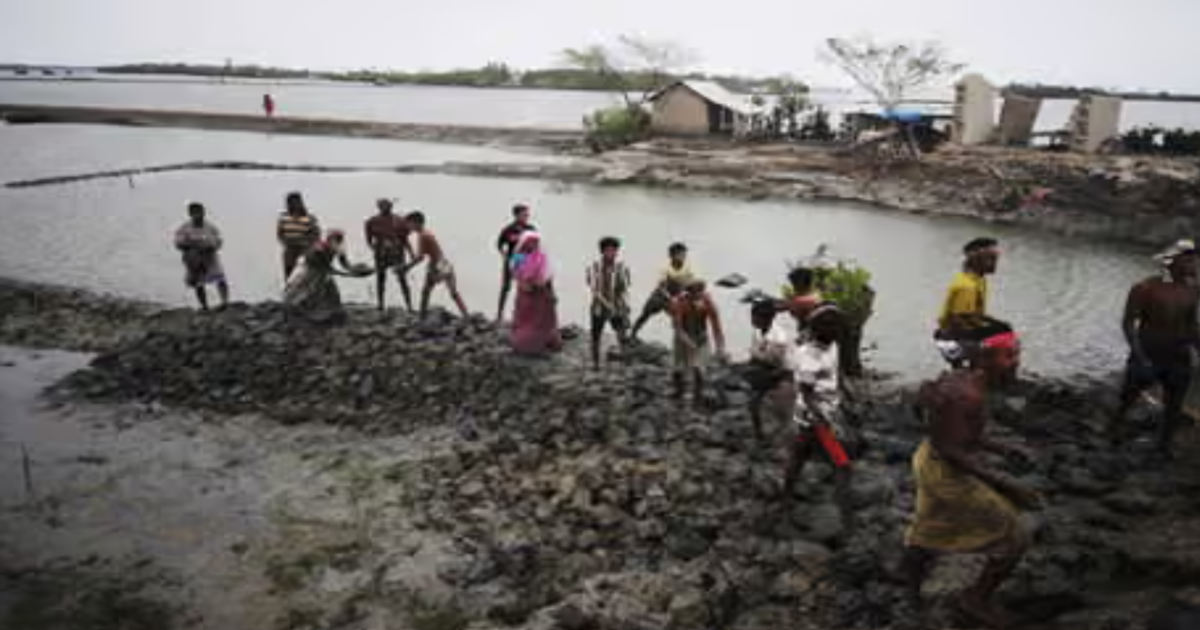
Bangladesh is facing a staggering $232.6 billion financing shortfall by 2030 in its efforts to combat rising seas, cyclones, and increasing salinity, according to a new report. Despite contributing little to global emissions, the country remains one of the most vulnerable to climate change, with its Nationally Determined Contributions (NDCs) outlining urgent needs for survival.

The country’s climate plan includes embankments, cyclone shelters, renewable energy, and salinity-resistant agriculture. However, the estimated $23 billion required annually until 2030 far surpasses Bangladesh’s current access to climate funds. Research group Change Initiative (CI) revealed that multilateral development banks approved $720 million for climate-related projects in Bangladesh, but only $232 million — around 32% — was actually disbursed, covering just 0.1% of projected needs. CI has warned this trend could push Bangladesh into a climate debt trap.
The World Bank, meanwhile, highlighted its support, reporting $7.2 billion committed between 2016 and 2024, with $4.1 billion for adaptation and $3.1 billion for mitigation. The bank said Bangladesh could potentially raise $12.5 billion more in the medium term, though the gap between available funding and the $23 billion annual requirement remains vast.
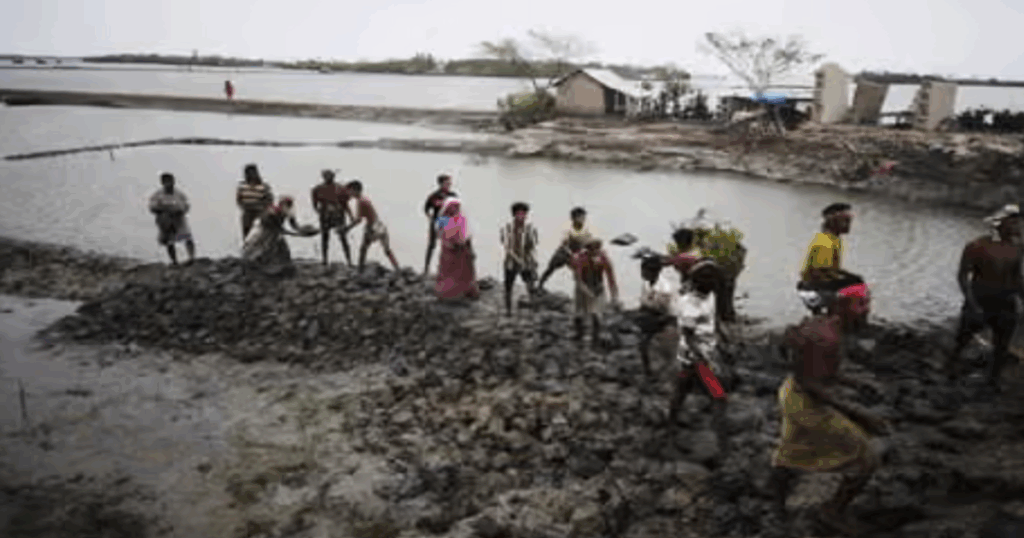
For farmers in affected regions, the climate crisis is not just about numbers. In Satkhira, 36-year-old farmer Sk Al Mamun described his land as cracked and saline after repeated cyclones. Forced to switch from farming crops to shrimp and crabs, he now struggles with debt just to buy food. “The water is salty everywhere, in the soil, ponds, and wells. Each storm brings the sea closer inland,” he said.
CI stressed that loans, even with concessional terms, are unsustainable for adaptation projects such as embankments and cyclone shelters, as they add to debt burdens and limit social spending. The World Bank defended its loan model, citing low-interest IDA credits with long grace periods, while also urging greater use of adaptation grants through mechanisms like the Green Climate Fund.
Some experts suggested that loans could still play a role in revenue-generating mitigation projects, such as renewable energy. Bangladesh aims to produce 30% of its energy from renewables by 2040, and multilateral banks are being urged to support this transition. The Asian Development Bank has begun offering local-currency loans for large projects, helping to reduce foreign exchange risks.
Globally, climate finance from multilateral development banks reached $137 billion in 2024, with $85.1 billion directed to low- and middle-income countries. Of this, $26.3 billion supported adaptation efforts. By 2030, MDBs aim to mobilize $120 billion annually, but experts say Bangladesh must align its proposals more closely with MDB priorities to unlock larger, faster flows of funding.
The economic toll of climate shocks is already evident. The World Bank estimated Bangladesh lost $1.78 billion in 2024 due to heat-related damages, equivalent to 0.4% of GDP. The IMF also provided $1.15 billion to stabilize the economy amid climate stress and debt pressures.
Experts recommend Bangladesh prioritize predictable adaptation grants, debt-for-climate swaps, and stronger pipelines of bankable projects. National climate funds could act as anchors to attract international co-financing. CI’s Zakir Hossain Khan pointed to lessons from countries like Fiji, Rwanda, and the Maldives in leveraging such models effectively.
Youth advocates also emphasized the need for inclusion. Sidur Rahman Siam of Brighters Foundation said young people must have a seat at the table when decisions of this scale are made. Volunteer for Environment activist Sk Mashrur Ishrak added that grassroots awareness, school-based climate education, and youth-led initiatives are essential to ensure ordinary citizens are empowered, not burdened.
For policymakers, the challenge is about pledges, loan terms, and disbursement rates. But for farmers like Mamun, it is about survival and whether future generations inherit fertile land or mounting debt.